
From Policy to Progress: Kenya's Sanitation Moment Must Deliver
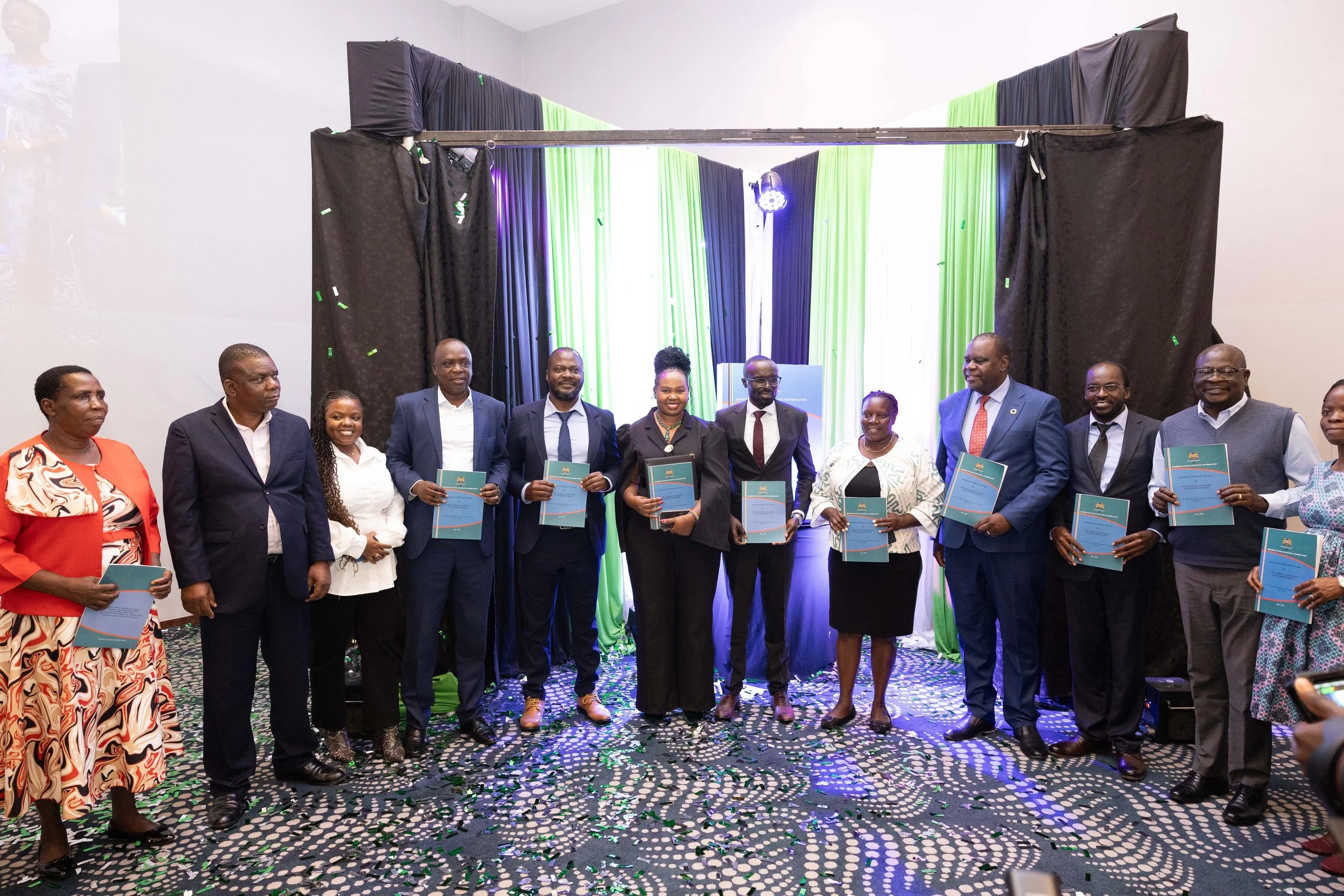
Guests at the National Sanitation Management Policy (NSMP) Launch, Nairobi
A Sector at a Turning Point
On 27 February 2026, Kenya marked a fundamental shift with the launch of the National Sanitation Management Policy (NSMP) and its implementation vehicle, the National Water and Sanitation Investment Programme (NAWASIP). Together, they signal a structural reset in how sanitation is delivered.
The launch aligned national and county leaders, development partners, utilities, and private sector actors around a shared goal: safely managed sanitation for all.
Beyond the moment, 3 decisive shifts stand out:
Blended financing to close the funding gap through public, private, and development capital.
Recognition of non-sewered sanitation, reflecting how most urban systems actually function.
Stronger institutional clarity, with defined roles, standards, and accountability.
Sanitation is no longer a fragmented set of projects - it is being positioned as a structured public service.
The development of Kenya’s National Sanitation Management Policy began in September 2020 when the Ministry of Water, Sanitation, and Irrigation formally initiated the process to create a dedicated national sanitation policy. A multi-stakeholder steering committee guided an inclusive consultative process at the national and county levels. Following regional and national validation, the draft policy - Sessional Paper No. 7 of 2024 - was tabled in the National Assembly on 13 November 2024 for consideration.
From Infrastructure to Service Systems
The NSMP reframes sanitation as a full-service chain - from containment and collection to treatment and safe reuse or disposal.
Infrastructure alone does not deliver sanitation. Systems do.
At its core is a circular economy approach, advancing the “4Rs” - Reduce, Reuse, Recycle, and Recover - unlocking models that convert waste into fuel, nutrients, and economic value.
What the Policy Means for the Sector
The policy creates a more predictable and investable environment. It:
Formalizes non-sewered sanitation and faecal sludge management as essential services.
Clarifies mandates across government and utilities.
Strengthens regulatory standards across the service chain.
Introduces dedicated sanitation budget codes to improve financing and accountability.
Promotes blended finance and public–private partnerships.
For private operators and social enterprises, this reduces risk and enables long-term, scalable investment.
Building Solutions in an Unstructured Environment
For years, providers operated without clear mandates or financing - but solutions still emerged.
Sanivation’s early work in Naivasha demonstrated how waste recovery and utility partnerships can deliver sustainable sanitation. That model has since expanded across multiple counties, increasingly embedded within formal utility systems.
These are not pilots - they are scale-ready service models.
The constraint was never a lack of solutions; it was the absence of systems to scale them.
Financing What Works
Kenya’s sanitation challenge is fundamentally a financing challenge.
Poor sanitation costs the country an estimated KES 36.5 billion annually (~1% of GDP), with a projected investment gap of USD 1.3 billion by 2030.
The NSMP responds through:
Blended finance mechanisms
Stronger public funding commitments
Dedicated sanitation budget codes
These reforms improve fiscal visibility, strengthen accountability, and enable long-term planning.
Policy clarity, combined with financing reform, creates real conditions for scale.
Delivery Happens Locally
Counties remain central to implementation, now backed by a stronger national framework.
Clearer roles and lifecycle service models enable better project design, regulatory compliance, and sustained partnerships.
Utilities are evolving into long-term service providers - responsible for both sewered and non-sewered systems.
The Private Sector: From Gaps to Systems Delivery
Private operators have long filled gaps - often informally.
The sector is now shifting toward structured, long-term partnerships with clear regulation and accountability.
Sanitation is not a one-off infrastructure. It is continuous service delivery.
From Policy to Projects — A Call to Action
Kenya is not short on policy. Execution at scale is the real challenge.
With the NSMP in place, the priority is clear:
Move from pilots to programmatic delivery
Strengthen county systems
Formalize partnerships
For the government, this means anchoring the policy in law and strengthening planning, budgeting, and oversight.
For investors and development partners, it means supporting project preparation, de-risking capital, and financing outcomes - not inputs.
Sanitation is not optional. It is a constitutional right under Article 43(1)(b) of the Constitution of Kenya (2010). Rights must be delivered.
Kenya now has the framework, momentum, and proven models. What’s needed is coordinated execution at scale!
The time to act is now!

Sector representatives at the NSMP Launch, Nairobi
Reference
Government of Kenya (2024). Sessional Paper No. 7 of 2024: National Sanitation Management Policy. Ministry of Water, Sanitation, and Irrigation.
Written by: Dickson Ochieng, Director of Government Partnerships
For more information, reach out via email at info@sanivation.com.
